
Workation, Wellbeing, and the Future of Employee Benefits

HelloWale Team
Published: August 14, 2026 · 6 min read

What do employee benefits look like in 2026? After decades of gym discounts and partially-used app subscriptions, employees are looking for benefits that don’t just sit in their inbox. The employee benefits that actually get remembered aren’t the biggest ones, they’re the most human ones. Workation sits at the intersection of wellbeing, flexibility, and real work-life balance. And it might be exactly what your organisation needs right now.
Employee benefits have evolved. The ones gaining real traction aren’t just perks, they’re tools for people to discover wellbeing and a better work-life balance. Meal subsidies, mental health platforms, flexible schedules…employees notice when an organisation genuinely invests in how they feel. And workation takes that even further. It combines rest, flexibility, and a change of perspective into a single benefit that’s hard to ignore. And it sends a message no wellness app ever could: we trust you.
At its core, workation is simple. Work from somewhere that isn’t the office, for a few days, a few weeks, somewhere new. Employers cover the costs, employees bring their laptop and their focus. It breaks the routine, restores balance, and reminds employees that work is something they do, not somewhere they’re trapped. What comes back is something far greater: restored job satisfaction, rebuilt trust, and a work-life balance that actually means something. And it works just as well in Poland as it does in Portugal.
What does a local workation look like?
Not every workation needs a passport. Long-haul travel brings its own stress with delays, disruptions, time zones, and costs that add up fast. And palm trees and white beaches don’t automatically guarantee actual rest. Staying domestic sidesteps the chaos without sacrificing the point of it. A welcome change of scenery without any of the headaches.
Poland has a lot of ground worth rediscovering. Forests, mountains, coastal towns, quiet. Destinations that are close enough to be easy and far enough to feel like a reset. No timezone confusion, no insurance headaches, no tax grey areas. Just a change of scene that actually lets people breathe and refocus.
Does workation actually work - or just look good on paper?
The honest question employers ask: will anyone actually work? It’s fair. But workation isn’t a holiday with a laptop nearby. It’s a structured arrangement with clear expectations. Defined hours, agreed deliverables, normal availability. The environment changes but the expectations don’t. Employees get not only the mental reset they need but a greater sense of trust; employers get the focus and output that comes with it. Everyone wins, but only if the framework is right.
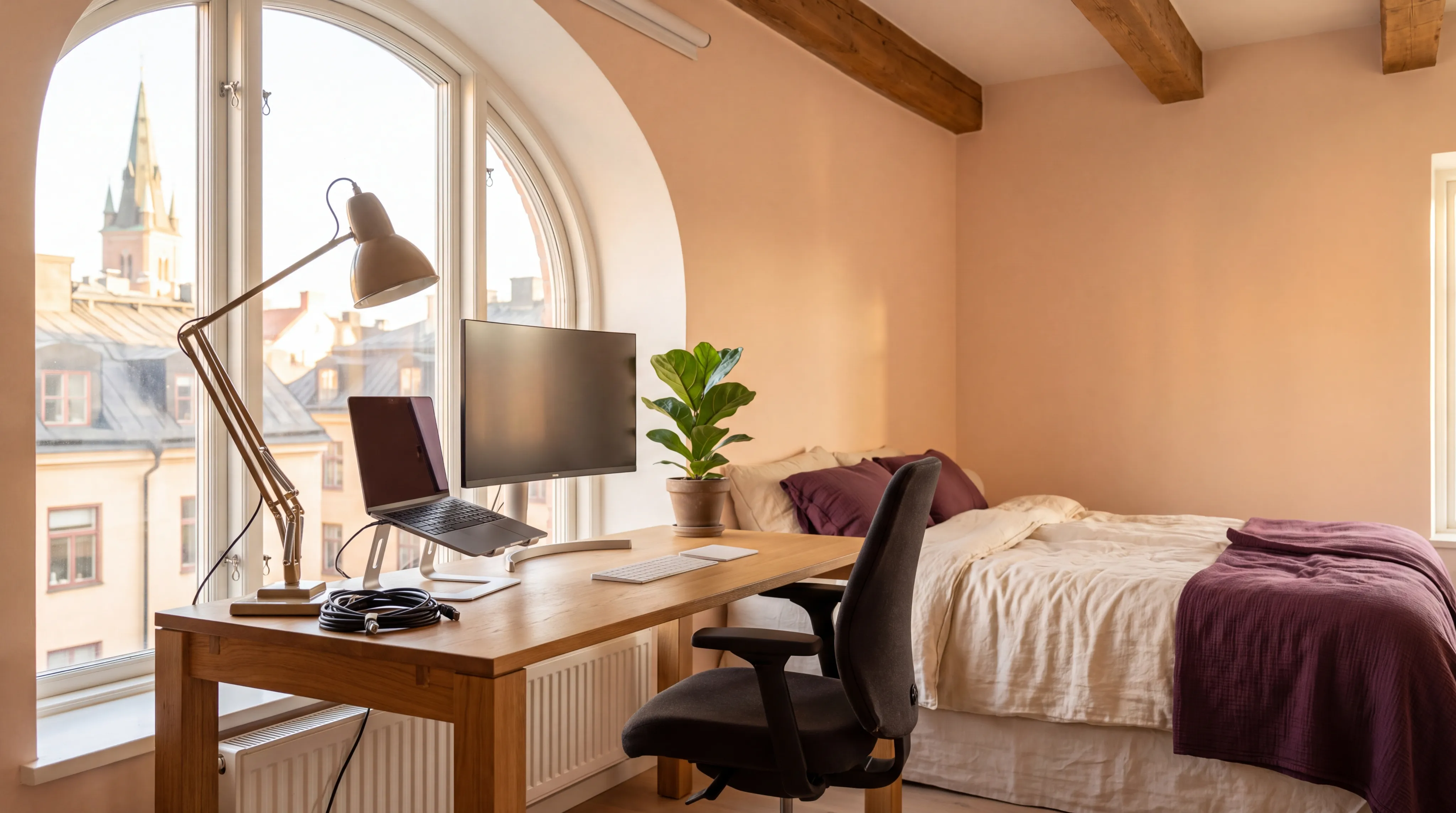
There’s a version of workation that trades one set of problems for another. Bad Wi-Fi, a kitchen chair, a screen that’s too small and too bright. That’s not wellbeing. That’s just a different kind of Tuesday. The physical setup matters: stable internet, proper ergonomics, a workstation that actually works. Good workation needs more than a good view. It needs good working conditions — and every HelloWale location is vetted to be a perfect fit.
How do you turn workation into an employee benefit?
Workation slots into a benefits package more naturally than most people expect. And it doesn’t mean funding an employee’s holiday. Organisations can build it into their employee benefits package in two ways — financial or organisational. And both have their place depending on what your employees actually need:
- Financially — An annual workation budget is set. Employers contribute to travel and accommodation costs, either as a shared annual budget or a per-person allowance.
- Organisationally — A fixed number of workation days per year. Same job, same expectations, just not from the usual location.
The organisational route can be the simpler of the two. Employers clearly outline a number of workation days per year where employees are encouraged to work in another location. An agreement that encourages people to work from a third place, that isn’t the office or their home.
Workation doesn’t work against Holiday Pay, it works with it.
If we were to use Poland as a case study, right now, the highest valued employee benefit isn’t a gym membership or a mental health app — it’s the traditional holiday allowance. According to a 2024 Randstad study, it’s the most valued benefit, rated positively by as many as 52% of respondents. That’s a strong foundation. Workation builds on it.
Workation works alongside existing similar benefits, amplifying the satisfaction, expanding existing holiday allowances and introducing a whole new employee benefit. Here’s what it looks like in practice:
- An employee uses their holiday allowance to take a week somewhere domestic.
- They then extend their stay by a few days but now under the workation scheme.
This kind of employer support model can simultaneously serve the company’s ESG policy by:
- Reducing relocation costs.
- Cutting down time spent commuting to the office.
- Making the return to work after a holiday more gradual and relaxed.
Other ways to frame workation as a benefit could include:
- An incentive or reward for completing a project.
- A form of recognition.
- An element of a retention programme and burnout prevention strategy.
Retention is where workation makes its quietest argument. Workation is not just an employee benefit to get people through the door, it’s a benefit that improves work-life balance and keeps existing staff feeling renewed and trusted.
Staff turnover is expensive and flexible working is one of the few benefits with hard data behind it. In 2024, a study by Stanford University found that flexible working reduces turnover by 33%. That number belongs to a broader flexible working model, not workation specifically. But the underlying logic holds: people stay where they feel trusted. And workation, done right, is one of the clearest ways an organisation can demonstrate exactly that.
Workation as a thoughtful new wellbeing benefit
Workation won’t solve every problem linked to work overload. But what it can become is an important signal that the organisation sees its people, trusts them, and invests in how they feel and their wellbeing beyond the office.
The value of workation isn’t just practical. It demonstrates that an organisation pays attention — to how its people feel, to how they work, and what they need to sustain both. For employees, often a simple change, a new location or pace of life, is enough to return to work refreshed, more engaged and ready to keep driving forward.
Viewed correctly, workation isn’t a cost. It’s an investment in the people who drive the organisation forward. Wellbeing isn’t a perk. It’s a practice. And workation might be the most honest version of it your organisation can offer. The best employee benefits don’t just look good on a hiring sheet. They change how work feels. Workation does both.
How HelloWale can support you
Finding the right workation location is half the work. HelloWale does it for you. Curated locations close to nature, checked for connectivity, ergonomics, and everything in between. Find the right location for your team.
Sources
- Stanford Report, “Study finds hybrid work benefits companies and employees,” 2024 — news.stanford.edu
- Randstad, Labour Market Monitor, 56th edition, 2024 — info.randstad.pl